AbstractOpen study note
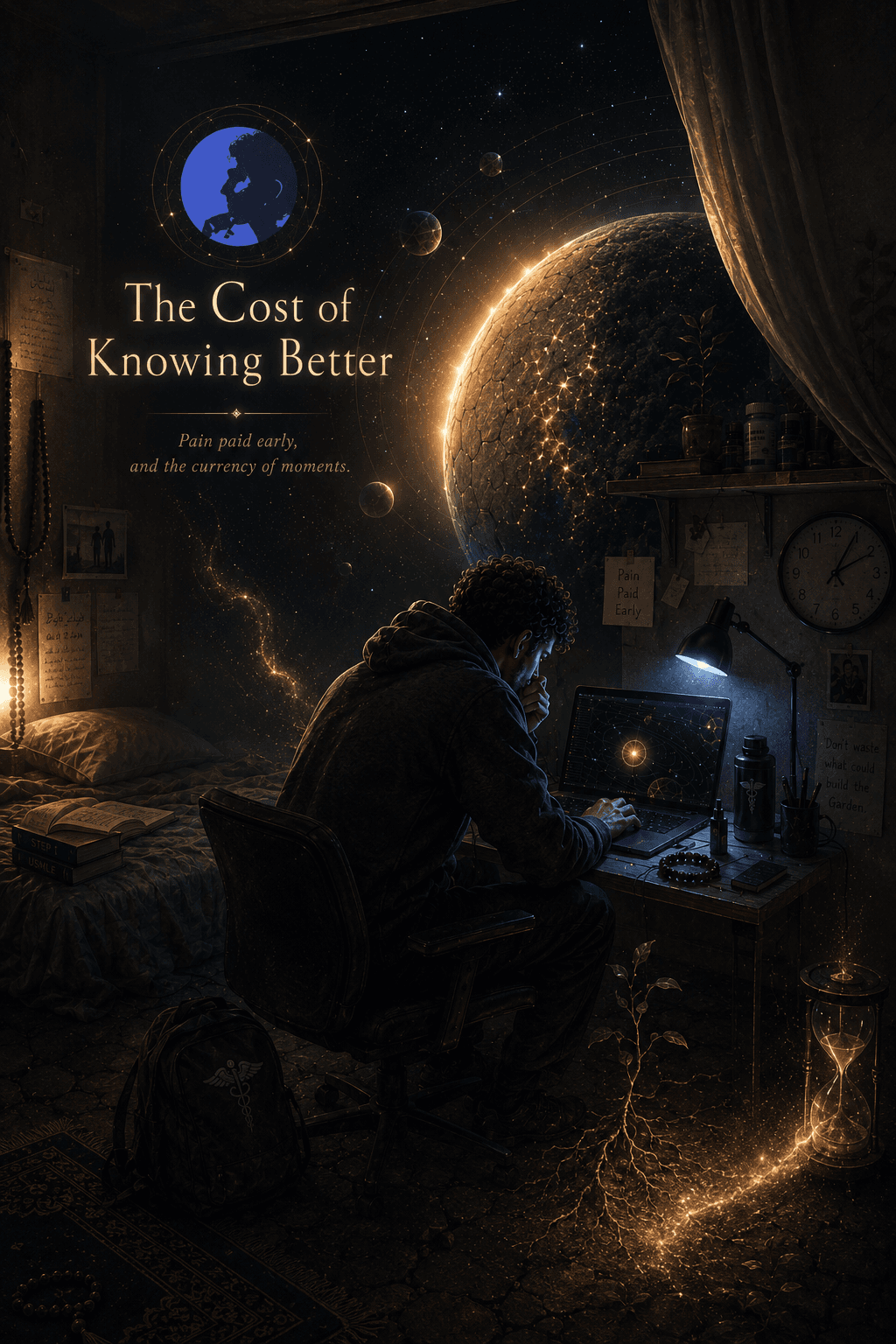
This essay examines the gap between recognition and obedience: the condition of knowing what must be done while repeatedly failing to do it. Across six months of medical school, illness, fatigue, faith, compulsive system-building, overstimulation, nicotine, family reflection, and the construction of a digital inner world called the Sanctum, a recurring pattern emerges: much of the suffering was not caused by ignorance, but by delayed obedience. This is a personal study of attention, habit, responsibility, faith, and time. Its central claim is simple: discipline is not punishment. It is pain paid early. Regret is pain collected later, with interest.
Keywords: discipline, attention, faith, overstimulation, habit, medical school, time, family, responsibility, Sanctum
1. Introduction: Six Months as a Measurable Unit
It has been almost six months since the last essay.
That should not feel like a confession, but it does. Six months is not a lifetime. It is not even a year. But it is long enough for a man to become sharper if he was serious. Long enough for a body to change. Long enough for a mind to clear. Long enough for a student to become dangerous. Long enough for a son to call home more. Long enough for an inner world to begin showing life from orbit.
It is also long enough to realize that time does not wait for sincerity.
A lot has happened since then. Medical school happened. Grenada happened. Fatigue happened. Sickness happened. Systems happened. Noctyrium happened. The Sanctum happened. Plans were built, revised, abandoned, resurrected, and polished until the polish itself became suspicious. I have lived through days where I felt chosen, and days where I felt like an impostor wearing the coat of a man who had earned it more honestly.
But beneath all of it, one truth kept returning.
The worst pain in my life has rarely come from not knowing what to do.
It has come from knowing exactly what I need to do and not doing it.
That is the cost of knowing better.
2. Primary Observation: Knowing Is Not Obeying
Ignorance has its own mercy. A man who does not know the road can at least claim he was lost. But what do you call the man who sees the road, names the road, understands where it leads, and still sits beside it negotiating with the smaller self?
That is not confusion.
That is disobedience.
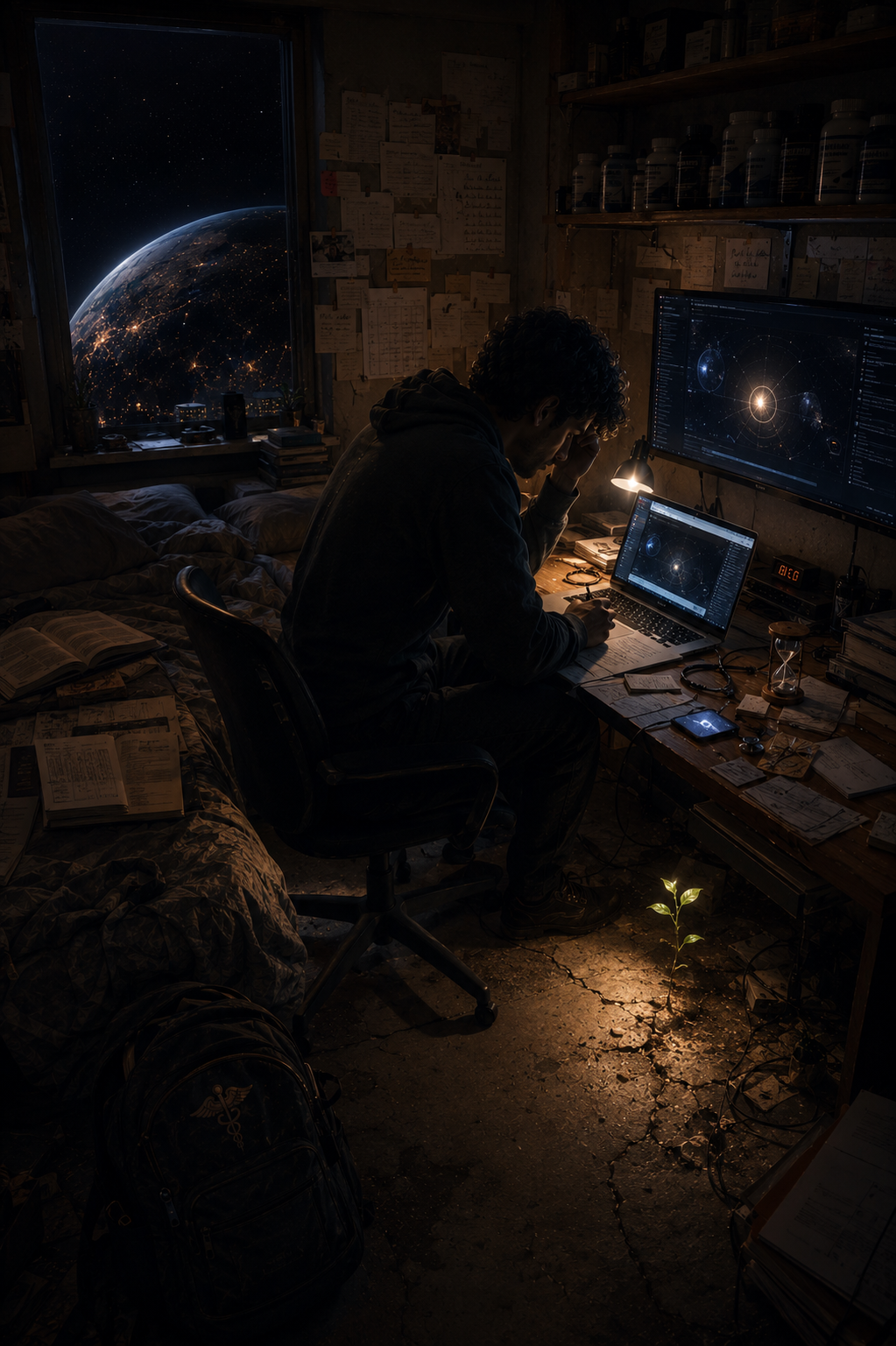
I know what sleep would do for me. I know what training would do for me. I know what studying with focus would do for me. I know what prayer would do for me. I know what restraint would do for me. I know what quitting the poison would do for me. I know what silence would do for me. I know what putting the phone down would do for me. I know what a few months of consistency could build.
And still, I bargain.
Just tonight.
Just five minutes.
Just one more check.
Just one more adjustment.
Just until I feel ready.
The smaller self always speaks in discounts.
But life does not sell consequences at a discount.
A little sweat now, or a lot of blood later. That is the equation I keep relearning. Sweat is pain paid early. Regret is pain with interest. Discipline is not punishment. It is mercy arriving before the wound becomes expensive.
I have felt too much bleeding that was self-inflicted.
Not dramatic bleeding. Not cinematic. Not the kind people gather around. The quieter kind. The kind that comes from staying up too late and waking up fogged. The kind that comes from half-absorbing a lecture because the night before was sacrificed to nothing. The kind that comes from postponing the gym until the body begins to feel like an accusation. The kind that comes from rushing prayer because the day was spent serving lesser gods. The kind that comes from opening the phone at the first flicker of discomfort and watching the mind scatter into pieces.
The bleeding is often invisible, which is why it is so dangerous.
It looks like another day ending with less done than I promised. It looks like bitten nails I never used to bite. It looks like the nervous hand reaching before the mind agrees. It looks like nicotine pretending to be relief while quietly collecting rent from the future. It looks like compulsive tweaking, reorganizing, polishing, planning, adjusting, and refining the system instead of obeying the obvious command in front of me.
Sometimes I build tools to avoid using them.
That sentence tastes sour because it is true.

3. Secondary Observation: The Tool Can Become the Avoidance
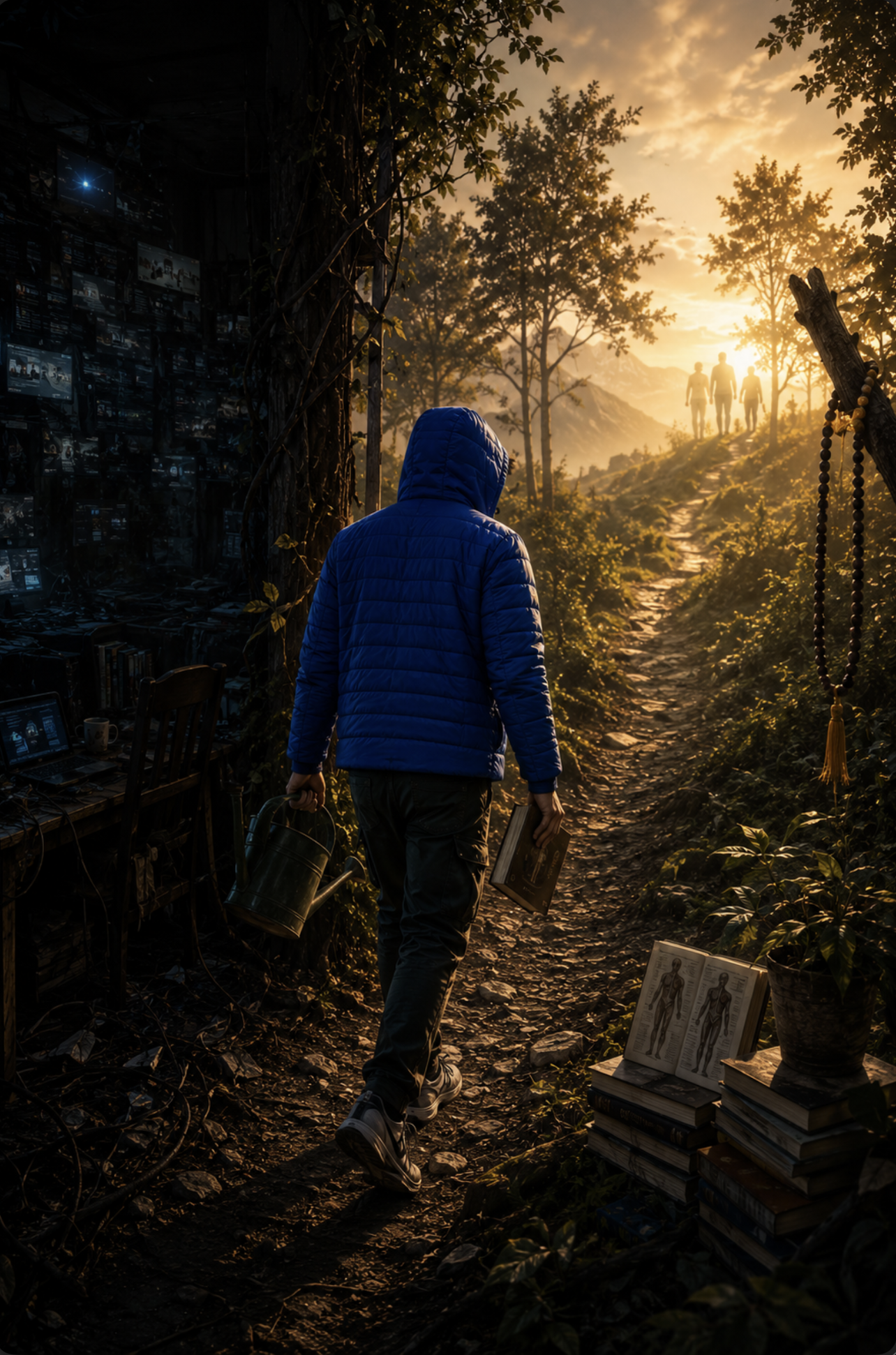
I have wanted my website to become a living world. A personal universe. A Sanctum. A place of refuge and reckoning. A place where study, faith, writing, discipline, family, memory, and ambition are not scattered fragments, but arranged into one inner architecture. A place where skills become structures, where growth becomes visible, where the private life takes shape through rooms, trails, roots, light, soil, and orbit.
I believe in that vision.
But the Sanctum also exposes me.
Because what good is a digital Sanctum if the one building it cannot protect the sacred hours of his actual life?
What good is Noctyrium if the builder remains nocturnal in all the wrong ways?
What good is a second brain if the first one keeps surrendering to the nearest glowing rectangle?
This is the pungent truth. It has a smell. Stale sleep. Dry mouth. Warm plastic. Sweat without progress. A room after too many hours of stimulation and too little obedience. The body knows before the mind admits it. The hand reaches for the phone. The teeth find the nail. The lungs want the hit. The nervous system asks for escape. The soul calls it hunger.
Humans have created tools to reduce friction, then used them to make avoidance frictionless. Brilliant species. No notes.
We do not simply waste time anymore. We optimize the container in which we plan to stop wasting time. We download the app, rebuild the dashboard, change the theme, rename the folder, restructure the system, and call it preparation. A noble little costume party for procrastination.
But the body is not fooled.
The exam is not fooled.
The soul is not fooled.
Allah is not fooled.
At some point, the question becomes brutally simple: did I obey what I knew, or did I decorate my disobedience?
4. Mechanism: Attention as Occupied Territory
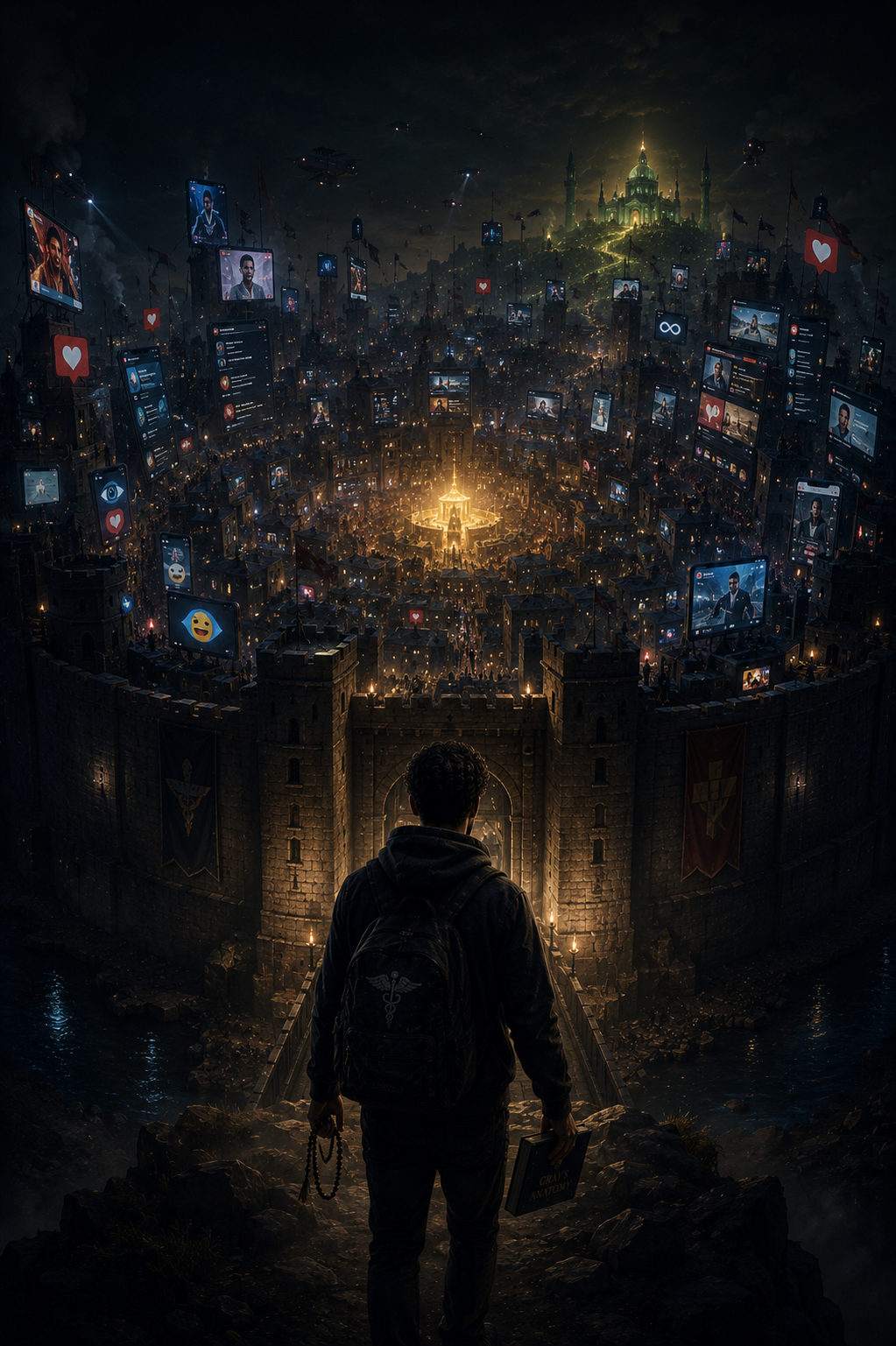
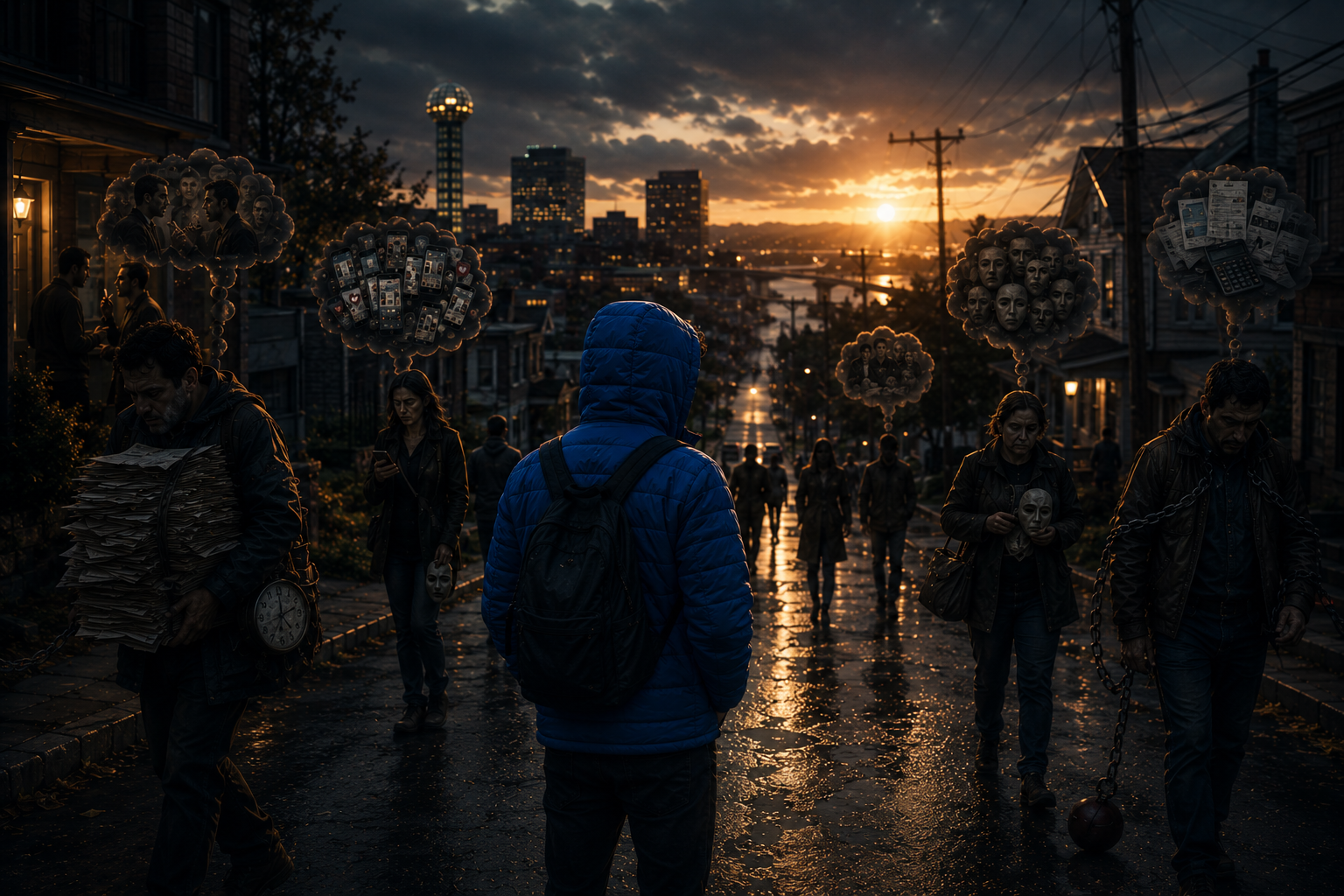
We live in an age where a man can hold a device in his hand and overload his brain in ten minutes with more novelty than his ancestors may have met in weeks. Rage, comedy, lust, tragedy, wealth, war, envy, advice, strangers, advertisements, noise. A whole empire of interruption sitting in the pocket, waiting for the first quiet moment to invade.
People call this connection.
Much of it feels more like occupation.
Attention has become occupied territory. Every app wants a flag in the mind. Every platform studies weakness like a locksmith studies a door. It knows when boredom opens a crack. It knows when stress loosens the hinges. It knows when silence becomes unbearable. Then it enters and asks us to call the invasion entertainment.
I can recognize this.
I can warn against it.
I can explain it with clarity.
Then I can fall into it myself.
That is the humiliation of knowing better.
There is a special misery in becoming your own ignored prophet. To see the cliff, describe the cliff, warn others about the cliff, build a beautiful dashboard that tracks cliffs, then wander toward the edge while pretending to check one small thing.
This is not only a technology problem. It is a self problem. A habit problem. A nerve problem.
Some problems live in the intellect. Others live lower. They live in the hand, the teeth, the breath, the stomach, the chest, the little twitch of avoidance before the mind can form an excuse. They live in the body’s refusal to sit still long enough for truth to speak.
My problems are not always that I do not understand.
Sometimes my body does not yet obey what my mind already knows.
5. Confounding Variable: Impostor Syndrome and the Ones Who Did Not Make It
And then there is another truth that has been sitting with me.
Some people did not make it.
There were people I knew, guys who studied harder than I did, who seemed more consistent, who sacrificed more visibly, who may have wanted it with a cleaner hunger. Some of them did not make it through the same doors. I did.
That can flare up as impostor syndrome. It can make me wonder why I am still here when others fought harder. It can make every weakness feel like evidence that I slipped through by accident.
But faith does not allow me to stop at insecurity.
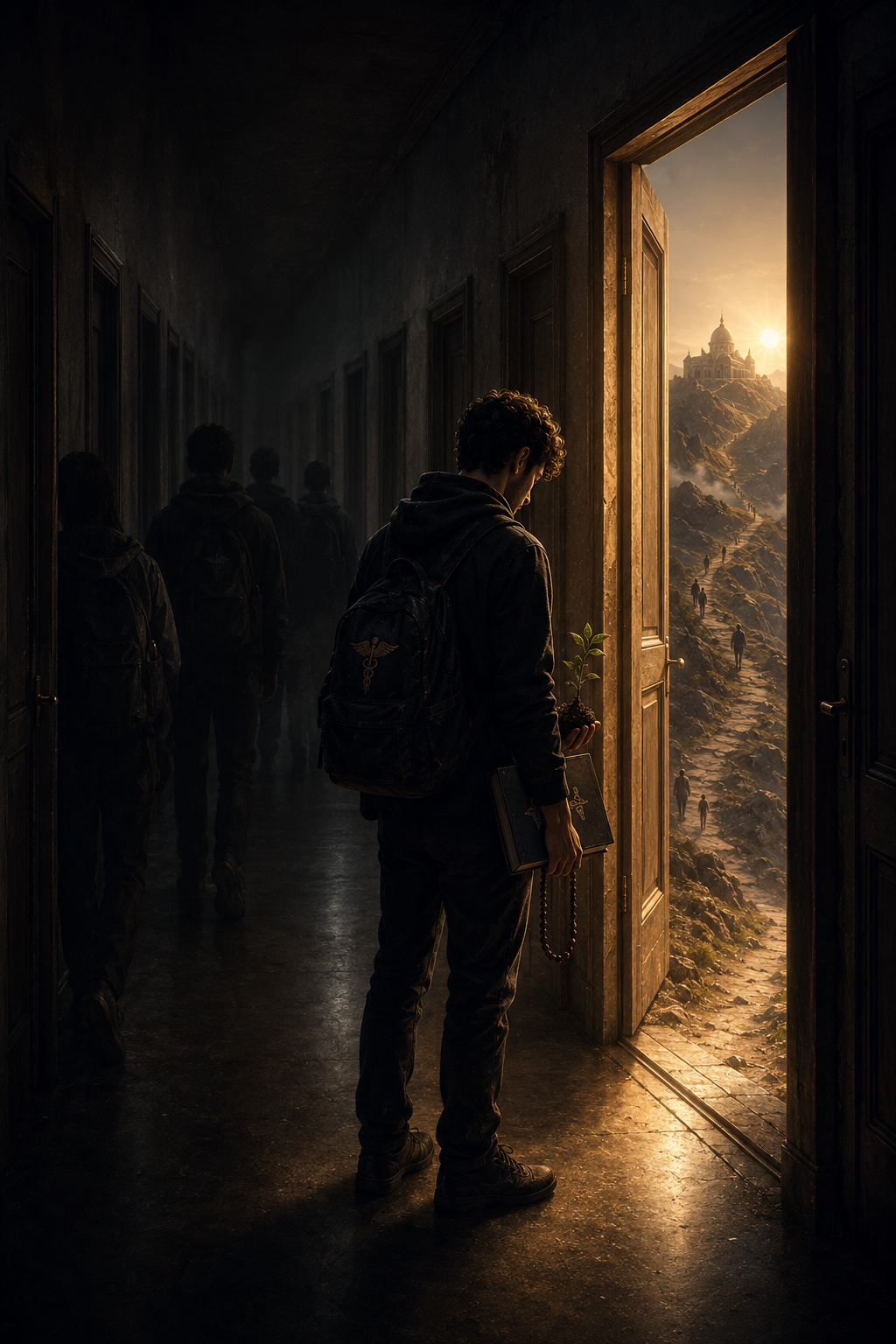
If I made it through a door others did not enter, then the correct response is not arrogance. It is not shame either. It is sujood. It is responsibility.
Some people worked harder than I did and did not make it.
I did.
That does not make me better.
It makes me responsible.
There is a strange balance a man has to carry if he wants to build anything serious. He needs humility before Allah and ferocity before the work. He needs to know that he was carried, and also move like he was chosen for a reason. He needs to bow his head in gratitude without walking into the world like an apology.
I was not brought this far to move like an apology.
That sentence is not arrogance if it leads to service. It becomes arrogance only if it leads to entitlement. The difference matters. One says, “I deserve comfort.” The other says, “I have been entrusted, so I owe proof.”
Medicine requires that kind of proof. So does faith. So does family. So does manhood. So does anything worth building.
6. Longitudinal Outcome: Family, Age, and Deferred Presence
I think about family more now.
I think about my parents getting older. Even writing that feels wrong, like naming it makes it more real. But it is real. Their bodies are moving through time. So is mine. Prices are rising. Responsibilities are rising. The world is not becoming cheaper, softer, or more patient. The future is not waiting politely for me to become useful.
There is sweetness here, and because it is sweet, it hurts.
Having parents to call is sweet. Having a body that can still train is sweet. Having a mind that can still learn is sweet. Having a future that is not yet sealed is sweet. Being young enough to change and old enough to understand why change matters is sweet.
But sweetness spoils when neglected.
A son who postpones presence will eventually inherit memories he wishes he had made. A student who postpones discipline will eventually meet an exam that does not care about intentions. A man who postpones health will eventually live inside a body that remembers every compromise. A builder who postpones execution will eventually own blueprints for a life he never constructed.
And what then?
Was that the strongest body I could have built?
Was that the clearest mind I could have sharpened?
Was that the highest grade I could have earned?
Was that the most money I could have made?
Was that the most useful I could have become?
Was that the most time I could have spent with my family?
Was that the best son I could have been?
Was that the best word I could have spoken?
Was that the man I kept claiming I wanted to become?
These questions are coming whether I prepare for them or not.
7. Discussion: Time Is Not Passing, It Is Being Spent
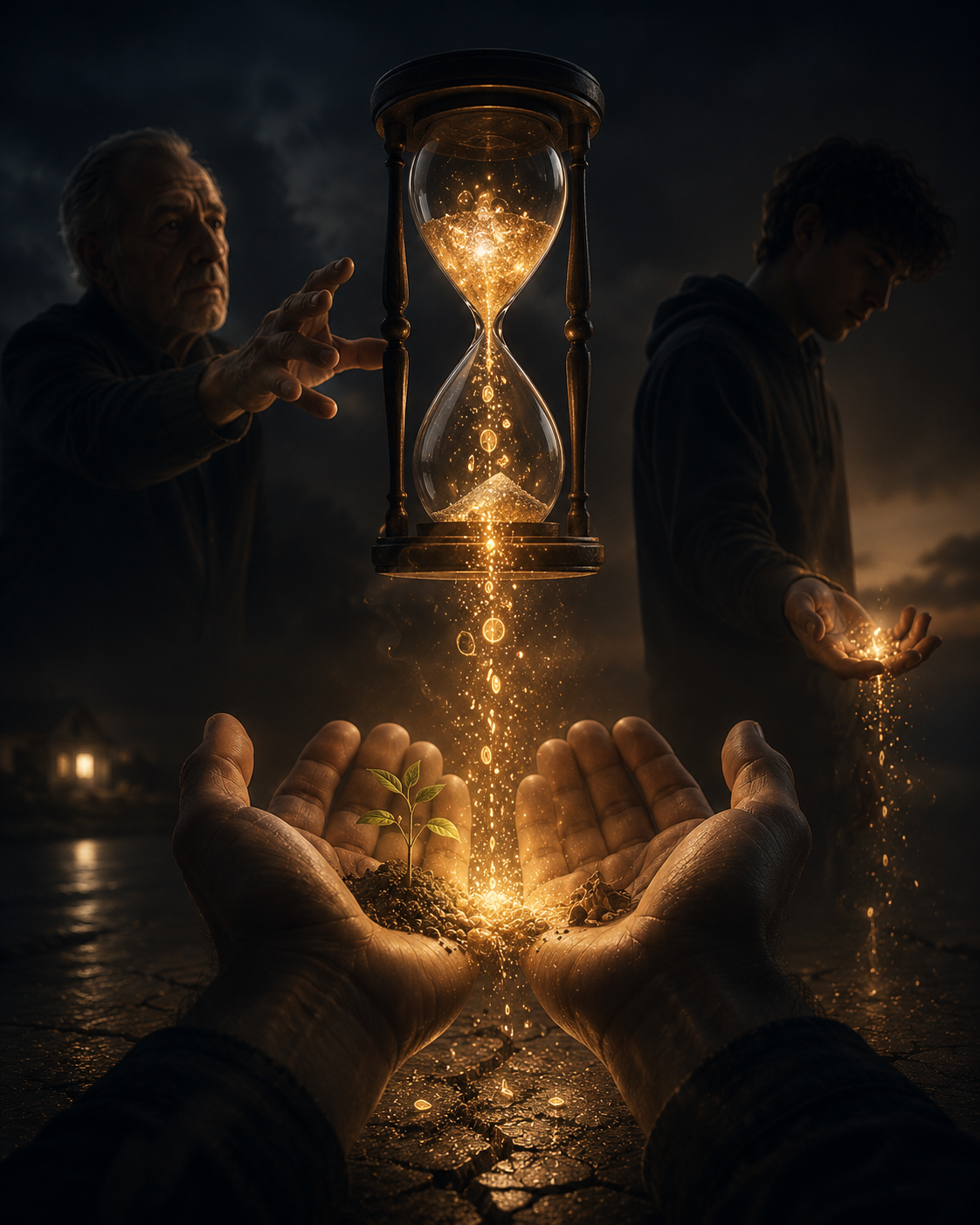
The wealthy old man would trade his possessions for the poor young man’s remaining moments. That is the terrible irony. Youth often spends carelessly what age would buy back at any price. The old know what the young keep forgetting: time is not only passing. It is being spent.
My currency is moments.
They leave whether I invest them or waste them. I cannot freeze them. I cannot hoard them. I cannot ask for yesterday to return because I finally discovered the perfect system today. Every hour goes somewhere. Into the body or against it. Into the mind or away from it. Into faith or forgetfulness. Into family or distance. Into craft or consumption. Into service or vanity. Into the Sanctum or into the weeds.
And weeds do not need discipline.
They grow by neglect.
That is what frightens me. The lesser life does not require a declaration. It does not demand that I renounce my goals. It only asks me to delay them. It only asks me to preserve the image of becoming while avoiding the labor of transformation. It lets me keep the dream as long as I keep feeding it tomorrow instead of today.
I saw this more clearly after being away from home.
After nine months, I came back and noticed how many people seemed the same, only with different problems. I do not say that with contempt. I say it with fear. Because it is easy to age without transforming. Easy to trade one set of complaints for another. Easy to change locations, outfits, routines, and conversations while the soul remains in the same room.
Failure can teach.
Stagnation sedates.
That is why I have to put myself out there more. Not just into work, but into life. New rooms. New conversations. New pressures. New responsibilities. New arenas where the old loops cannot run as easily. Some habits cannot be defeated only by thinking harder in the same room where they were born.
A man does not become new by admiring transformation.
He becomes new by interrupting the loop.
8. Model: The Sanctum as Protected Inner Architecture
This is where the Sanctum comes back to me.
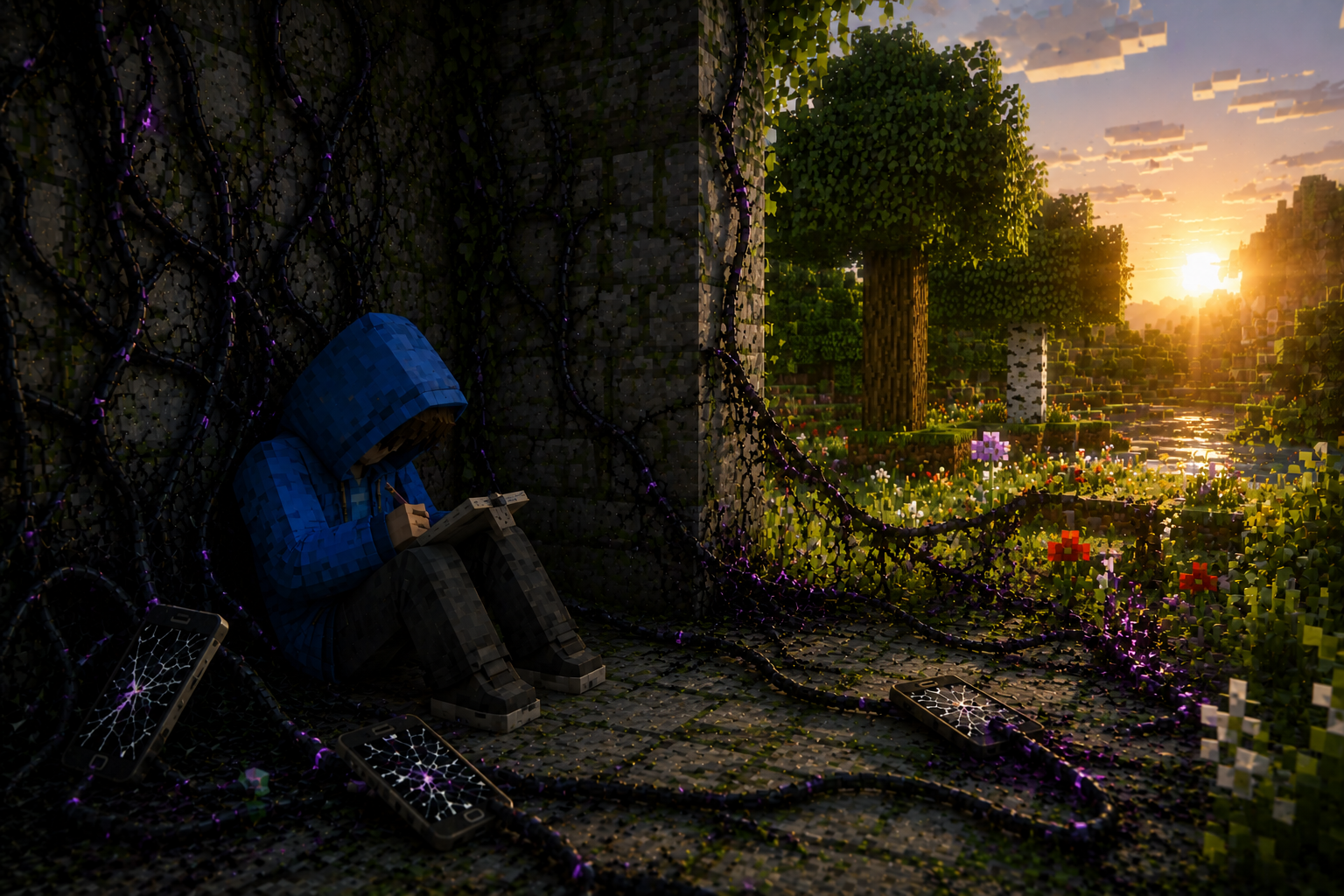
The Sanctum is not decoration. It is doctrine. It is the visual form of a truth I keep trying to live: nothing sacred survives without protection. Nothing grows because it was imagined. Nothing blooms because it was planned. Nothing becomes fruitful because I admired the idea of fruit.
The soil responds to what is repeatedly done.
So does the soul.
Every skill becomes a structure only if the skill is practiced. Every trail appears only if walked. Every root deepens only through repeated contact with the earth. Every field note, every essay, every lecture, every prayer, every workout, every resisted craving, every honest hour becomes part of the architecture.
A barren planet does not become green because it understands photosynthesis.
It needs water.
It needs light.
It needs seasons.
It needs the repeated mercy of cultivation.
That is what I want this next version of the website to feel like. Not a static portfolio. Not a museum of old thoughts. A living Sanctum. A place where faith, medicine, writing, systems, family, discipline, and imagination all breathe in the same atmosphere. A place where the About page is not just a biography, but a covenant. Not only who I am, but who I am becoming, what I serve, and what I refuse to waste.
9. Conclusion: Obedience as Intervention
This essay is not an announcement that I have arrived.
It is a refusal to keep pretending I do not know the cost.
I know enough now.
I know that pain paid early is mercy.
I know that moments are currency.
I know that attention is a battlefield.
I know that addiction does not need to kill a man quickly to steal from him completely.
I know that faith without obedience becomes decoration.
I know that confidence without humility becomes poison.
I know that humility without action becomes another hiding place.
I know that I was carried through doors others did not enter.
I know that my parents are aging, my body is aging, my opportunities are aging, and my excuses are aging with them.
I know.
That is the cost.
So now the question is not whether I understand.
The question is whether I will obey.
Not perfectly. Perfection is often just fear wearing expensive clothes. Not dramatically. Drama burns hot and dies fast. I need something quieter and harder.
Daily obedience.
Sleep when it is time to sleep.
Study when it is time to study.
Train when it is time to train.
Pray before the day hardens.
Call home before regret has to dial for me.
Put the phone away before it becomes the hand that moves my hand.
Quit feeding the addiction that keeps invoicing my future.
Build the system, then live by it.
Protect the Sanctum.
The moments are leaving.
The soil is listening.
And if I was carried through doors others did not enter, then I owe more than celebration.
I owe proof.